


On the morning of October 21, Thai Nguyen University (TNU) held a meeting to review and evaluate the implementation of its shared English language program. The meeting aimed to assess achievements, identify challenges and limitations, and suggest solutions to improve the quality of foreign language teaching and learning across the University.
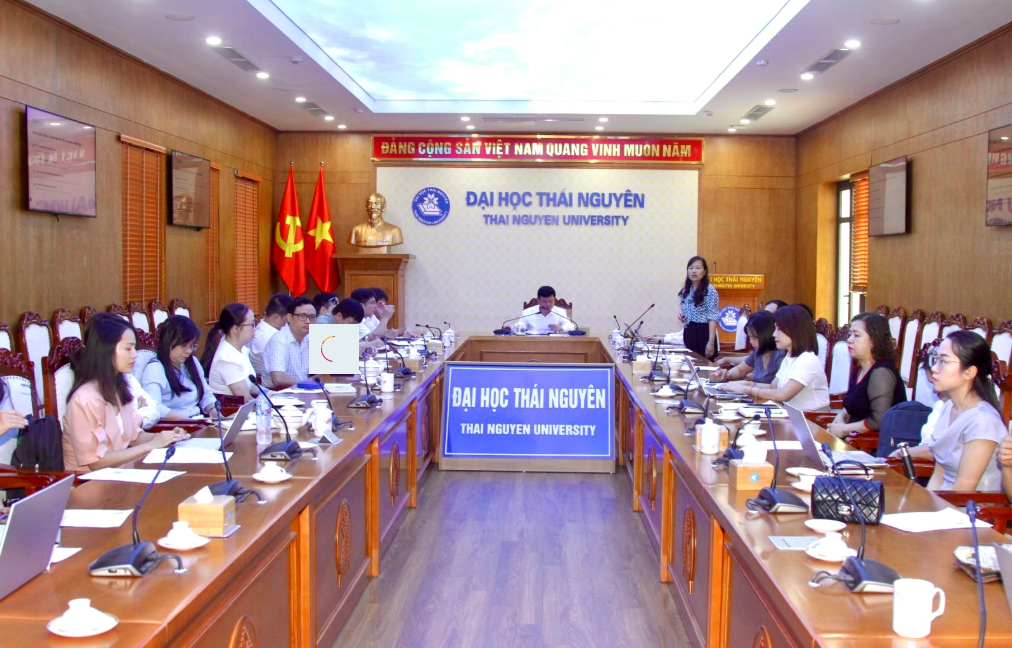
An overview of the meeting.
The meeting was attended by Assoc. Prof. Hoang Van Hung, Secretary of the Party Committee and President of TNU; representatives of the leadership and staff of the Department of Academic Affairs and Student Affairs; representatives of member universities and affiliated units; and the expert team responsible for developing the shared English language program under a decision issued by the TNU President.
According to the consolidated report, TNU’s shared English language program comprises three courses, each worth three credits, designed in accordance with Vietnam’s Six-Level Foreign Language Proficiency Framework. English 1 targets Level 2 (A2), English 2 reinforces A2 proficiency and provides a transition toward Level 3, while English 3 targets Level 3 (B1).
The program features a clear learning pathway and specific, measurable learning outcomes. It also standardizes course structures, assessment content, and grading components across participating units, facilitating program management, training delivery, and comparisons of learning outcomes.
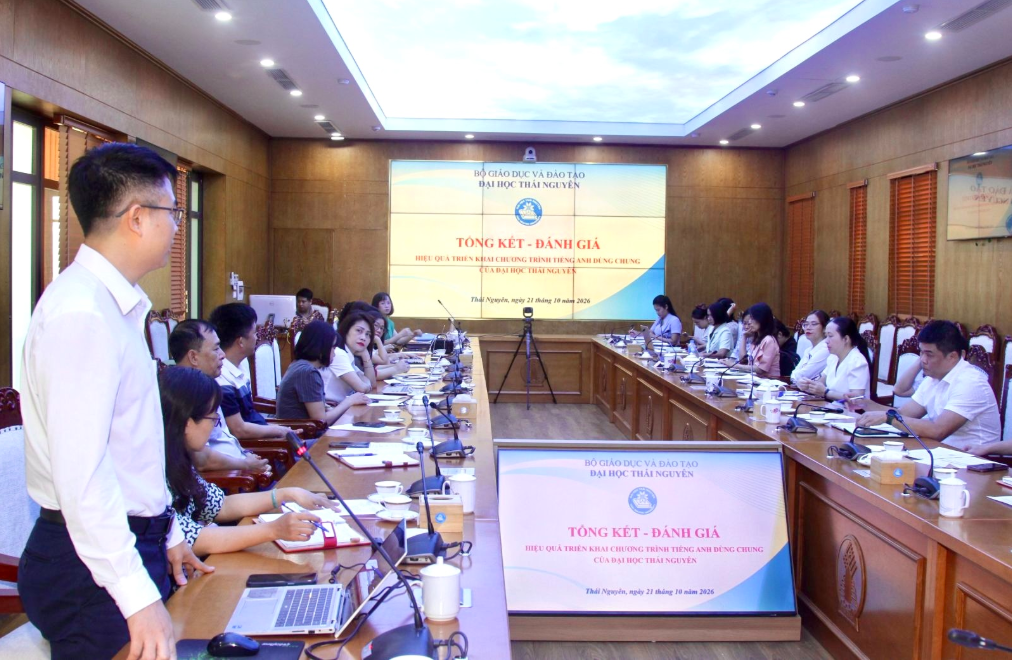
Delegates attend the meeting.
The implementation of the program has yielded several positive results. Some units have recorded improvements in student learning outcomes across successive cohorts. Teaching materials have been comprehensively developed, while experienced and dedicated lecturers have proactively adopted innovative teaching methods, differentiated learning tasks, and prepared revision materials suited to students’ proficiency levels.
Greater attention has also been paid to analyzing score distributions, examination difficulty, and the relationship between examination scores and final course grades. These efforts provide a foundation for adjustments and continuous improvements in training quality.
At the meeting, delegates exchanged views on the advantages and challenges encountered during implementation. Discussions examined the underlying causes of difficulties in teaching the program, as well as issues concerning teaching materials, the examination question bank, and instructional methods. Participants proposed solutions to improve program effectiveness, maintain consistent learning outcomes, and accommodate the training conditions and learner characteristics of individual units.
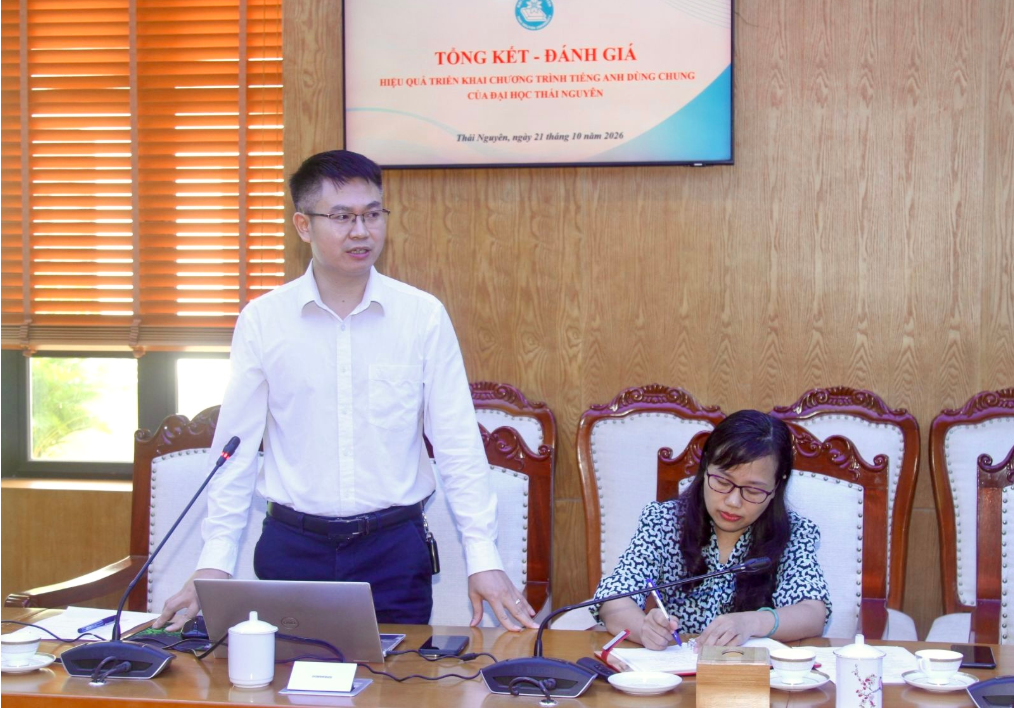
Prof. Nguyen Danh Nam, Head of TNU’s Department of Academic Affairs and Student Affairs, speaks at the meeting.
Based on the evaluation findings, the report recommended that TNU and relevant units review and refine all three courses to ensure continuity along the A2–A2+–B1 learning pathway. Other priorities include standardizing teaching materials, developing shared textbooks and revision guides, reviewing the examination question bank to ensure accuracy and comparable difficulty across different test versions, and establishing consistent assessment criteria for speaking and writing skills.
The report also emphasized the need to innovate teaching methods through differentiated instruction tailored to students’ proficiency levels and to increase opportunities for listening, speaking, and writing practice.
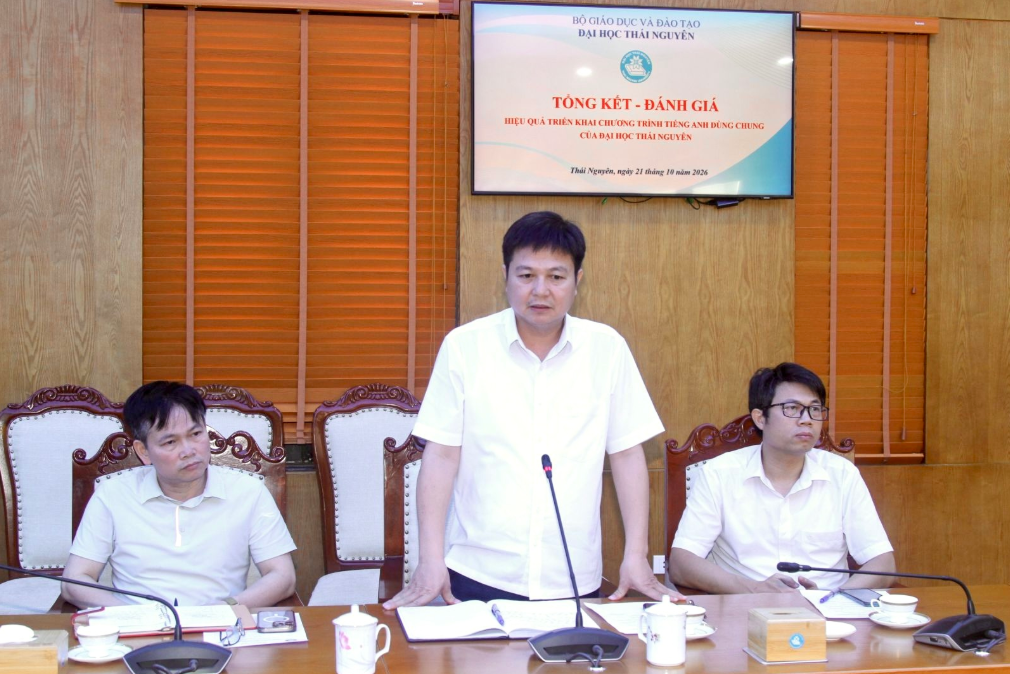
A representative of TNU’s University of Economics and Business Administration speaks at the meeting.
Developing a shared digital repository of learning resources, applying technology and artificial intelligence to support language practice, and expanding English communication opportunities through clubs and extracurricular activities were also identified as important measures.
In addition, participating units were encouraged to regularly analyze student performance data, collect feedback from lecturers and students, and conduct periodic benchmarking to facilitate timely adjustments to the curriculum, teaching methods, and assessment formats.
The meeting provided an opportunity for TNU and its member units to comprehensively assess the effectiveness of the shared English language program and identify priority areas for improvement. These efforts will contribute to enhancing foreign language education and helping students better meet learning outcome requirements and the demands of international integration amid ongoing changes in higher education.


